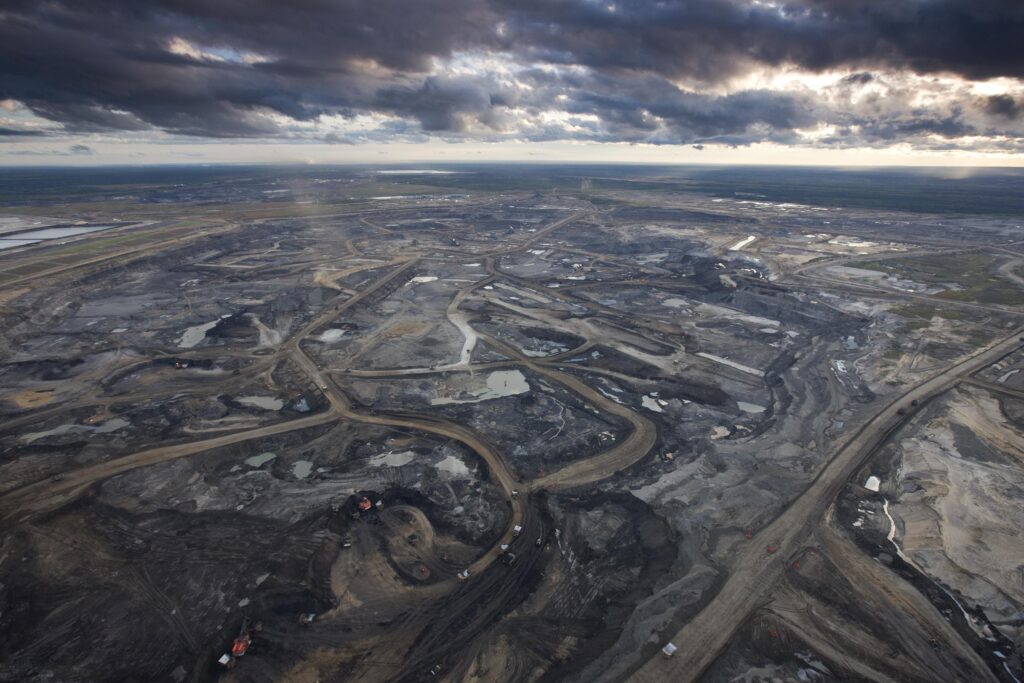
Counter to the international advice from science, Directions in Canada’s issued under the Canadian Net-Zero Emissions Accountability ACT and The Emissions Reduction Plan do not reduce oil production to achieve targets. Instead, there’s a reliance on plugging leaks and electrifying some processes to produce more “clean” oil. Improved awareness on this is required to change directions toward reduction and elimination of oil production in Canada.
Why is the Government and Industry talking about decarbonizing oil production instead of banning oil production altogether?
The recent announcements relating to the Emissions Reduction Plan issued under the Canadian Net-Zero Emissions Accountability Act were a little disappointing in the area of oil. Instead of achieving net-zero by putting a timetable for closing oil production, the Canadian government is allowing for a continued expansion of oil production while pretending to “decarbonize” the sector by trying to plug leaks and encourage more electricity.
To tell you the truth, it took me a couple of double takes… BUT… anyway you look at it, you cannot eliminate GHG by expanding oil production.
THE PROBLEM OF CANADA’S RECORD
I just had a bit of a read of the recent (April 2022) press release 2030 Emissions Reduction Plan: Clean Air, Strong Economy. The government described their 2030 Emissions Reduction Plan as “an ambitious and achievable roadmap that outlines a sector-by-sector path for Canada to reach its emissions reduction target of 40 percent below 2005 levels by 2030 and net-zero emissions by 2050.”
In the oil and gas part of the announcements, there was reference to “decarbonizing oil production”. Well, I was intrigued… What does “decarbonizing” mean and how did they get to that??
THE RECORD
First, let’s take a peak at Canada’s emissions record. Canada government’s own data says that there has been HUGE increases in GHG emissions since 2005. If you measure it from 1990, it is a whapping 87% increase!! That is the value that shows up in Our World in Data and at the International Energy Agency.
Meanwhile, in France, UK, Germany and Japan (and other nations) they are reducing GHGs while growing their respective economies. Even in the US (the trends lines are a little wonky because of Covid), it looks like they stabilized emissions over that same time period.
THE RECORD
It is important for us to establish a couple of points about Canada’s Record. Canada’s own data says GHGs from the oil and gas sector have increased 87% from 102 megatons of carbon dioxide equivalent (Mt CO2 eq) in 1990 to 191 Mt CO2 eq in 2019. This increase is – by far – attributable to the increased production of crude oil and the expansion of the oil sands industry.
Let’s not go kids gloves on this. This data is clear as a bell.
ENTER THE FAKE RESEACH ON “DECARBONIZING”
There’s some advice from industry think tanks like the Oil Sands Pathways to Net Zero Alliance and even the Pembina Institute that seemed to start using the terms “decarbonizing” and “clean oil production”/ about decarbonizing Canada’s oil and gas supply”.
The Pembina Institute, is one of those think tanks that help us understand how to deal with transition from fossil fuels here in Canada. They usually have a great track record of telling us important things about GHGs and the energy sector. They get us used to talking about carbon tax, emissions tracking, new energy sources, and point to the areas of the economy that need to drastically cut emissions.
Jan Gorski from The Pembina Institute published “Decarbonizing Canada’s oil and gas supply cutting sector’s emissions by 2030 is key to reaching net-zero by 2050”. The paper tried to explain that production-related emissions could be cut/managed by a bunch of process tweaking and electrification measures and, of course some federal funding.
It looks like this “decarbonizing” angle worked its way up to the policy teams in Ottawa.
It might have been an attractive angle for the good folks at Emissions Reduction area briefing government officials on options for the tar sand (Canada’s largest and dirtiest oil fields). It could probably sound pretty bold and reassuring to the public because they are talking about emissions reductions (fake reductions) when it comes to oil. And at the same time clearing the way for continued increases in oil (pretending to be cleaner oil) production.
This is not just a simple a paradox. It is a win-win (cake-having-and-eating) arrangement.
This focus on emissions conveniently ignores eliminating/capping Canada’s oil production.
FEDERAL ANNOUNCEMENT
Let’s focus on the that Federal announcement.
The government recent announcement on the Emission Reduction Plan oil and gas section said… “New projects would have to deliver emissions performance—the amount of greenhouse gas pollution it takes to produce a barrel of oil or cubic metre of natural gas—that is best in class, and all future oil and gas projects would have to be net zero by 2050.”
And it goes on. “The federal measures outlined in the 2030 Emissions Reduction Plan will ensure that Canadian oil and gas production becomes less emissions intensive (i.e. fewer emissions per barrel) over the next decade”.
On the topic of oil and gas, the federal announcement introduced a cap on emissions. It says: “the cap will be designed to lower emissions at a pace and scale needed to achieve net zero by 2050. The government is also working to reduce oil and gas [related] methane by at least 75 percent by 2030”. The plan has… emission reductions to 31 percent below 2005 levels in 2030 (or to 42 percent below 2019 levels).
So…. If you’re paying attention to this…. It looks like we figured out how to set targets to REDUCE EMISSIONS from oil and gas operations, instead of actually reducing oil and gas production.
The announcement writes itself. Lower “this” and that by a double digit amount of “that” WHILE still increasing the amount of oil produced. The oil that is burned elsewhere is someone else’s GHG problem.
THE IEA AGREES THAT CANADA IS TRYING TO CLEAN EXTRACTION.
The International Energy Agency seems to agree that Canada is trying to clean-up its oil extraction business. They say, “Oil will continue to be a significant fuel for the Canadian economy in the decades to come, with continued domestic production coupled with policies to reduce domestic oil use resulting in a growing amount of Canadian oil being available for exports.”
Later in the same report, “Canada is seeking to position itself as a world leader in offering the “cleanest barrel” through enhanced electrification of the upstream sector.”
THE MOST OBVIOUS QUESTION IN THE WORLD
What is going on with the more serious question of how much extraction are we planning to allow?
The forecast from “EnergyNow”, a Canadian-based news and data media service, says Post-2022, Canadian upstream oil and gas capex (that means extraction) is expected to rise, reaching over $44.3 billion by 2030.
The people at the Canadian Association Of Petroleum Producers take this pretty seriously. They acknowledge the shrinking domestic market for oil in the coming decades and point to the need to focus on market share in the international marketplace. They say, “Canada has an opportunity to gain global market share, replacing less sustainably produced oil sources. At the same time, a healthy Canadian industry with access to global markets ensures ongoing prosperity and economic benefits across the country.”
So, the overall strategy is to burn more and more Canadian oil (dirty Canadian oil) through the next several decades while dishing out key messages about reducing emissions – fake.
HOWEVER: THE SCIENCE SAYS THE WORLD HAS TO REDUCE OIL PRODUCTION
It is clearly difficult to understand why that kind of somewhat supportive comment in the IEA’s report would stand right beside the other IEA language about the urgent need to immediately stop continued fossil fuel exploration and production.
IEA own analysis describes that it is necessary to completely phase out the use of oil and gas in order to achieve a sustainable future…
“The world needs to do a rapid shift away from fossil fuels.”
And they continue: “Net zero means huge declines in the use of coal, oil and gas. This requires steps such as halting sales of new internal combustion engine passenger cars by 2035, and phasing out all unabated coal and oil power plants by 2040.”
EVERY BARREL OF OIL PRODUCED IS A BARREL TO BURN
Carbon emissions from oil and gas in operating fields and mines globally would push the world beyond 1.5°C of warming and make it impossible to meet our global obligations under the Paris Agreement. This is true even if global coal use were phased out overnight, and cement emissions were drastically reduced
Canada will need to reconcile future growth in oil sands production with increasingly strict GHG requirements. The framing of the discussion in terms of efficiency improvements in extraction, to emissions per barrel, is a blank cheque to oil producers and a terrible lie to Canadians.
Recall that GHG emissions from oil and gas production went up by 26% between 2000 and 2019, largely from increased oil sands production AND are singly responsible for the current (unique among the G8) increase in Canada’s GHG emissions.
Electrifying extraction doesn’t mean anything. With the current strategy, Canada will help the world get way past the 1.5C to the last cleanest Canadian barrel.
The opinion research shows clearly, that Canadians want real action on Climate. We learned that the Government and industry have opted to use the “production – related emissions” a focus for the REDUCTION PLAN instead of limiting oil production. This is NOT what ordinary Canadians signed up for.
LINKs
Canadian Net-Zero Emissions Accountability ACT and The Emissions Reduction Plan
https://www.iea.org/countries/canada
https://www.iea.org/reports/net-zero-by-2050
https://ggon.org/wp-content/uploads/2019/12/GGON_OilGasClimate_English_Dec2019-1.pdf